
David Sacks announced on Dec. 18 that Senate Banking Chair Tim Scott and Senate Agriculture Chair John Boozman confirmed a January 2026 markup for the CLARITY Act. “We look forward to finishing the job in January!” The problem: a January markup isn't finishing anything. It's the opening move in a multi-year pipeline where the most …

David Sacks announced on Dec. 18 that Senate Banking Chair Tim Scott and Senate Agriculture Chair John Boozman
confirmed a January 2026 markup for the CLARITY Act.
“We look forward to finishing the job in January!”
The problem: a January markup isn’t finishing anything.
It’s the opening move in a multi-year pipeline where the most contested questions haven’t been resolved, and
statutory language still sits in brackets.
The real work won’t begin until the bill clears a Senate floor vote, conference negotiations, and a
presidential signature.
The CLARITY Act passed
the House in July alongside the GENIUS stablecoin bill. It now sits in the Senate Banking Committee,
where two separate drafts must be merged before any markup can occur.
Those drafts still have bracketed definitions of what counts as a “security” and how much DeFi infrastructure
falls within the regulatory perimeter. They also leave open how intrusive reporting requirements become for
trading venues.
A January
markup means staff agreed to start negotiating. It doesn’t mean the hard decisions are made.
The split and what’s still moving
CLARITY’s core move divides crypto into three buckets.
“Digital commodities” are tokens tied to blockchain systems, such as payments, governance, and network
incentives, excluding securities and stablecoins.
“Investment contract assets” are digital commodities sold for capital-raising. They start as securities under
SEC jurisdiction at issuance, then lose security status in secondary trading and flip to CFTC oversight.
“Permitted payment stablecoins” are national-currency tokens issued by supervised entities that tie into the
GENIUS framework.
That hands the CFTC exclusive jurisdiction over digital commodity spot markets, beyond its current anti-fraud
remit. The SEC keeps authority over issuers and offerings of investment contract assets.
Meanwhile, banking regulators supervise stablecoin issuers. The lines on the field are inked, but some
markings are still in pencil.
“Security” itself sits in bracketed language in Senate text. The Senate Agriculture draft leaves entire DeFi
sections bracketed and labeled “seeking further feedback,” because no one has agreed on what counts as
“decentralized” enough to age out of securities status.
Plumbing that doesn’t exist yet
CLARITY creates an entire cast of new registered entities. Digital commodity exchanges must meet core
principles around listing standards, surveillance, system safeguards, capital, and reporting.
They can only list tokens where issuers meet disclosure requirements, including source code.
Digital commodity brokers and dealers need CFTC registration, capital standards, recordkeeping, and retail
customer protections.
Qualified digital asset custodians hold customer digital assets for registered firms under the supervision of
the banking regulator, the SEC, or the CFTC.
DeFi carve-outs exclude non-custodial activities, such as running nodes, validating, and building wallets,
from regulated intermediary status, though anti-fraud powers still apply.
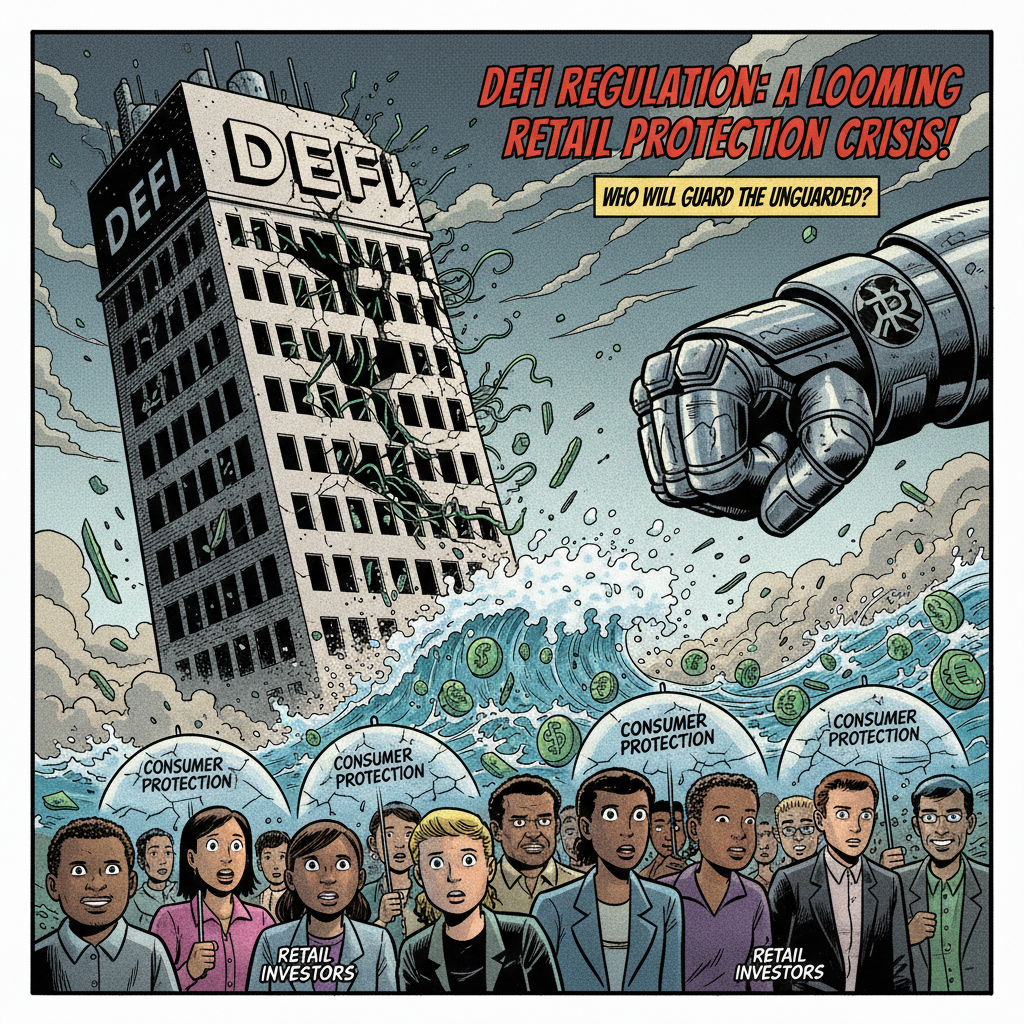
Senate Agriculture leaves those sections bracketed because the trade-off is unresolved: making it too broad
risks a retail protection collapse, but making it too narrow risks moving protocol offshore.
Custody is where the bill bites. CLARITY forces exchanges and brokers to hold customer digital assets with
qualified custodians and segregate customer property.
The draft directs regulators to modernize recordkeeping so blockchain can serve as books and records. It bars
regulators from forcing banks to treat customer crypto as balance-sheet assets or to hold extra capital
beyond operational risk.
The statutory text punts most of the real detail into future custodial standards, disclosure templates, and
unwritten listing rules.
Additionally, the bill gives regulators 360 days from enactment to write most rules, with some provisions
stretching to 18 months in Senate drafts. That means years of hybrid status where today’s market plumbing
coexists with partially implemented US law.
Politics haven’t settled
The markup is taking place amid a disputed backdrop. Democrats are uneasy about Trump’s control over
independent agencies, especially if the Supreme Court lets presidents fire SEC and CFTC commissioners at
will.
Legal analysis noted that the investment contract carve-out could enable regulatory arbitrage, shifting
oversight away from the SEC post-fundraising and leaving a historically underfunded CFTC to police retail
spot trading.
Before anything changes on an exchange screen, Banking and Agriculture merge their drafts. Both committees get
through markups, where Democrats will push for tighter retail protections and limits on presidential
control.
Leadership finds 60 votes on the Senate floor, not a glide path in a divided chamber.
The House and Senate reconcile their versions in conference or through direct acceptance. The President signs
it, and appropriators fund a much larger CFTC footprint that former officials say the agency can’t handle
without significantly more money and staff.
Regulators write the rules over 360 days to 18 months. Firms transition into provisional status while rules
finalize.
The courts weigh in, because Supreme Court doctrine on agency power means key rulemakings around token
classification and DeFi treatment will face litigation.
David Sacks can look
forward to finishing the job in January, but from the market’s view, January is the beginning of a multi-year
pipeline before anything becomes binding. The hard part hasn’t started.
Source: https://cryptoslate.com/clarity-act-markup-is-just-the-start-of-a-18-month-rulemaking-gauntlet/