
On the last day of 2025, while most traders were half watching fireworks and half pretending they were not checking charts, the quietest corner of the financial system started making a lot of noise. Banks pulled a record amount of cash from the Federal Reserve’s SRF, about $74.6 billion, on December 31. That number matters …
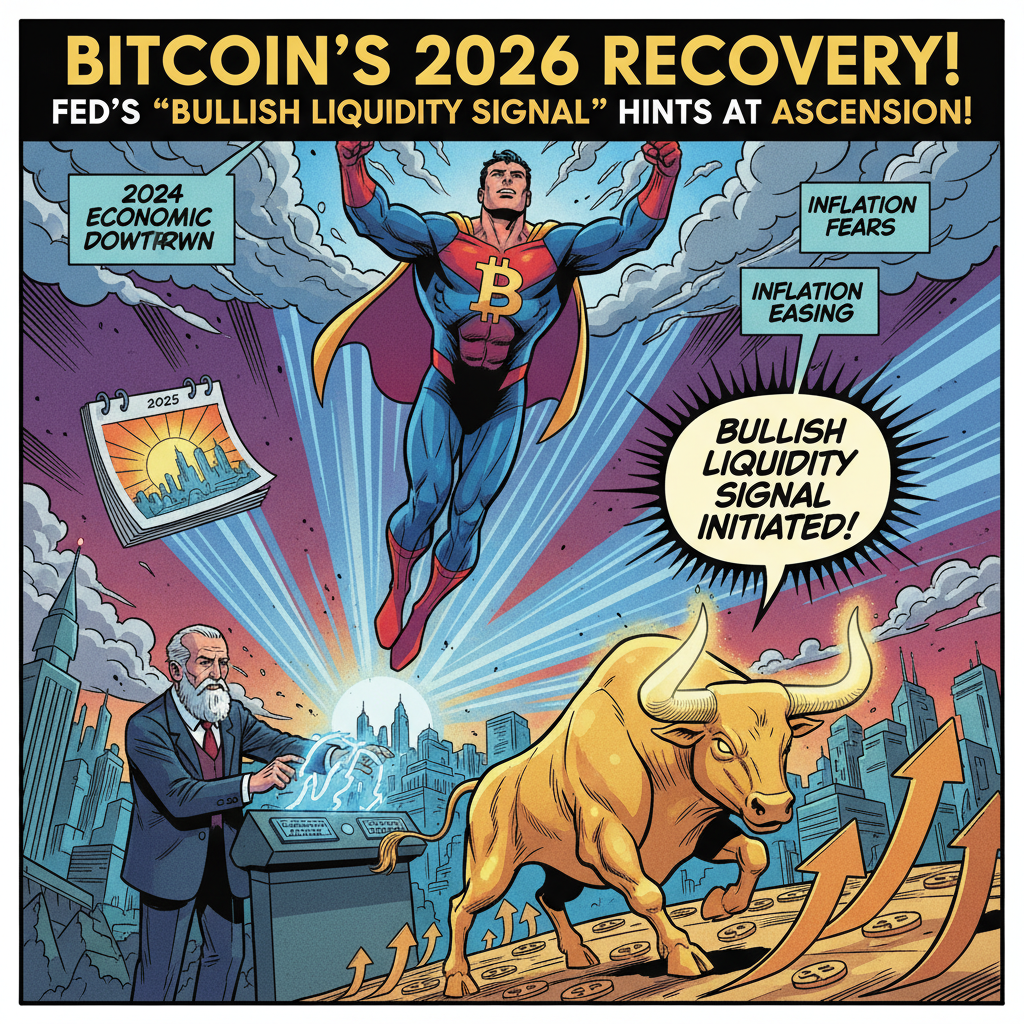

On the last day of 2025, while most traders were half watching fireworks and half pretending they were not
checking charts, the quietest corner of the financial system started making a lot of noise.
Banks pulled a record
amount of cash from the Federal Reserve’s SRF,
about $74.6 billion, on December 31. That number matters because the Standing Repo Facility is the Fed’s
pressure valve, banks swap high-quality collateral for overnight cash, and they usually tap it hardest when
private funding markets get tight.
If you read crypto long enough, you learn that Bitcoin not only trades on narratives, it trades on oxygen.
Liquidity is oxygen. When it gets scarce, everything feels heavier, bids thin out, rallies struggle, and
every selloff looks sharper than it should.
That is why CryptoSlate, as well as many macro-focused accounts, including Kobeissi, flagged the year-end repo spike as a sign of
stress.
The Kobeissi Letter, however, also hinted at something else, a turn in the liquidity tide that could show up
in risk assets, including Bitcoin, sooner than people expect.
The repo spike was the symptom, the Fed response was the tell
Year end stress in funding markets happens almost every year, banks want their balance sheets to look clean
into reporting dates, they step back from lending, cash becomes less available, and short term rates can
wobble.
This time, the wobble was bigger. Alongside the record SRF usage, money also rushed into the Fed’s reverse
repo facility, $106 billion on the same day, another classic “play it safe” behavior when balance sheets
tighten.
The important part for 2026 is what came next, because the Fed had already started moving before the year-end
spike hit its headline.
On December 12, the New York Fed began Treasury bill purchases,
about $40 billion in “reserve management purchases,” with the stated goal of keeping reserves ample. That
sounds boring, and it is supposed to be. These purchases are marketed as maintenance, the Fed saying it wants
the pipes to run smoothly, and the interest rate plumbing to behave.
Markets tend to treat that maintenance as a signal, because it changes the direction of liquidity at the
margin.
A month earlier, the Fed also confirmed it would cease the runoff of its
securities holdings starting December 1, effectively ending the ongoing drain from quantitative tightening.
Even if you never want to call this a pivot, the balance sheet stopped shrinking and then started growing in
a targeted way.
That sequence matters, and it matters for Bitcoin, because Bitcoin’s relationship with macro has matured over
the last two years.
The ETF era pulled BTC deeper into traditional market flows, and the market now watches the same plumbing
signals that credit traders watch.
Why this kind of “plumbing stress” can flip into “plumbing support”
If you want the simple version, banks borrowing $74.6 billion from the SRF does not automatically mean
liquidity is improving.
It means cash felt tight enough that they preferred to borrow from the Fed, and that can happen for seasonal
reasons, for deeper reasons, or for both.
The part that points toward improving liquidity early in 2026 is the Fed’s willingness to lean against
reserve scarcity, and it is doing that with balance sheet tools rather than speeches.
The New York Fed’s RMP statement also
signals the pace should remain elevated “for a few months,” because non-reserve liabilities tend to jump
around April. That line matters for anyone trying to time liquidity conditions; it suggests the Fed expects
this support to run through early spring.
In plain English, the Fed is trying to keep enough cash in the system so banks and dealers do not reach a
point where they start rationing liquidity, which could spill into broader markets.
When dealers can fund positions smoothly, market depth improves. When market depth improves, price moves do not
need as much force to travel. Bitcoin tends to like that world.
Why traders care about the pipes
Most people experience “liquidity” like they experience weather. They do not see it directly, but they feel
it in the air.
In crypto, the feeling shows up as thin weekends, sharp wick downs, and rallies that look strong until they
meet a wall of sellers who have been waiting for any bounce to exit.
In traditional finance, the feeling shows up as repo rates jumping, banks retreating, and suddenly everyone
starts talking about facilities that almost nobody outside the bond world had heard of.
Year-end funding stress is usually a short story. This one has a longer tail, because it connects to a bigger
theme, reserves have been getting tight again.
Volatility has been compressing, the market has been bracing, and it is waiting for a cleaner signal to
re-risk.
When the pipes stop rattling, leverage starts to creep back in, and crypto tends to notice before the macro
crowd gives it a name.
If the four-year cycle is fading, liquidity becomes the cycle
A lot of people still anchor Bitcoin to the halving calendar. The halving matters; it changes issuance,
shapes long-term supply dynamics, and remains part of the story.
What is changing is the marginal driver, the thing that pushes price week to week and month to month.
Spot ETFs pulled Bitcoin into a world where flows can dominate. You see it in the way the market reacted
during 2025: inflows helped push rallies, while outflows and risk-off positioning helped deepen drawdowns.
CryptoSlate has already documented how brutal that reset was in the ETF complex. Total U.S. spot Bitcoin ETF
AUM peaked at $169.5B on October 6, and fell to $120.7B by December 4, in CryptoSlate’s ETF
AUM breakdown.
When AUM is hit that hard, the market takes a while to rebuild trust. The first requirement for that rebuild
is a cleaner liquidity backdrop.
This is where the “cycle might be over” framing becomes useful: it lets you talk about what actually drives
the next move and opens the door to looking at macro plumbing without apologizing for it.
Grayscale leans into that idea directly. In its 2026
outlook, the firm argues that 2026 could mark the end of the apparent four-year cycle and that
Bitcoin could exceed its previous high in the first half of the year.
Standard Chartered has been making a similar structural point from a different angle; their research head has
argued that ETF flows have become a more critical price driver than the classic halving rhythm.
You do not have to agree with every target price in those notes to use the framing; the market structure has
changed, and liquidity signals have become more critical.
What to watch in early 2026, the indicators that tell you liquidity is actually improving
If you want a clean checklist that stays useful beyond today’s headlines, here is what matters.
- Does SRF usage normalize after the calendar turns?
A sharp fade would support the idea that December
was mainly seasonal. Persistent large prints would suggest deeper reserve-tightness and keep the Fed
under pressure to keep adding liquidity.
- Do Treasury bill purchases keep running at size into Q1?
The New York Fed has already laid out the
schedule logic in its RMP statement. If
that “few months” turns into a longer program, the liquidity impulse strengthens.
- Do broader financial conditions stay loose?
You can track the Chicago Fed’s National Financial
Conditions Index via FRED. Loose conditions alongside reserve support
is the kind of setup risk assets usually like.
- Does crypto native liquidity grow again?
Stablecoins are the simplest proxy for transactional
liquidity inside crypto. DefiLlama’s stablecoin dashboard is helpful here; if the total
market cap starts rising in a sustained way, it often lines up with improving risk appetite.
- Do ETF flows turn from background noise into a steady bid?
Farside’s ETF flows table is the daily tape. One green
day does not change a regime, a steady streak does.
- Does volatility keep compressing?
A calmer vol regime makes leverage cheaper and makes institutions
more comfortable adding exposure.
What liquidity returning could mean for Bitcoin price, a realistic path, not a fantasy candle
The market loves clean narratives. Liquidity improves, Bitcoin pumps, everyone cheers.
Reality moves more slowly.
Liquidity improvements usually show up first as smaller selloffs, better order-book support, and rallies
that keep their gains instead of giving everything back overnight. Then flows return, spot buying becomes
more consistent, and larger moves become possible.
A reasonable base case for early 2026 looks like this: funding stress eases after year-end, the Fed keeps
reserve management purchases elevated, conditions stay loose, and crypto sees a slow rebuild of confidence.
In that world, Bitcoin does not need a new story every week. It needs a market structure that makes it easy
for new money to enter, and hard for small pockets of selling to knock the price off a cliff.
A more bullish version layers on two things: a stronger run of ETF inflows and a visible rebound in
stablecoin supply growth. That combination turns liquidity support into demand, and demand is what moves the
price.
A riskier version keeps the plumbing rattling. If funding stress persists or if another macro shock tightens
conditions, liquidity can vanish quickly, and Bitcoin’s beta returns in a hurry.
That is why the repo spike matters. It was a warning light that also forced the system to show its hand.
Banks reached for the Fed’s backstop in size, the Fed had already started adding reserves through bill
purchases, and QT runoff had already stopped.
Those are minor details if you live entirely inside crypto.
They are big details if you believe Bitcoin is becoming a macro asset with a new kind of cycle, a liquidity
cycle.
Early 2026 could be the first clean test of that idea.
If the pipes stay calm, if reserve support continues, and if flows return, Bitcoin does not need a halving
narrative to do what it does best; it just needs oxygen.